If you want to buy a hydrogen-oxygen generator for home use, what should you look at first? Not the flow rate, not the price, and not the number of free gifts. The first thing to check is what is actually inside the electrolyzer. The electrolyzer is the heart of a hydrogen-oxygen generator: water is electrolyzed here, and the resulting gas is delivered directly into the respiratory tract and alveoli. Whatever materials are present inside the electrolyzer may potentially affect the substances carried along the gas pathway.
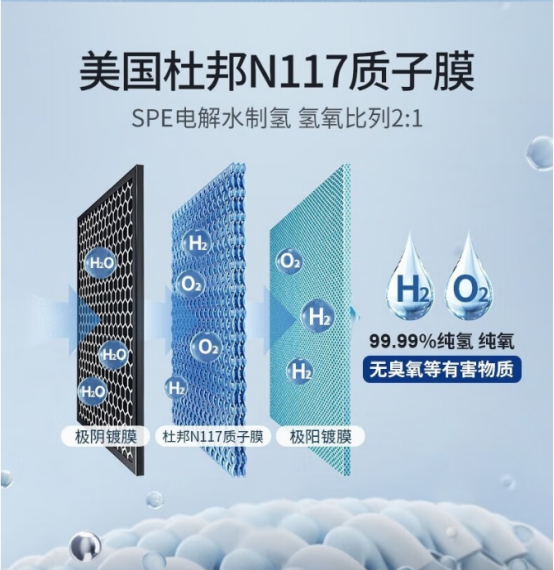
Search for “hydrogen-oxygen generator” on e-commerce platforms, and you will find many product pages prominently advertising claims such as “imported DuPont proton-exchange membrane,” “genuine U.S.-made proton-exchange membrane,” or “iridium proton-exchange membrane.” In merchants’ descriptions, an “imported membrane” is presented as a mark of quality—the more advanced the membrane, the more reliable the device appears to be. However, when consumers trace the “imported proton-exchange membrane” claim to its underlying application, the conclusion is quite different: perfluorosulfonic acid proton-exchange membranes were designed for industrial fuel cells and industrial hydrogen production by electrolysis, and have not been validated for the specific use case in which the generated gas is intended for long-term human inhalation.
This article starts from the underlying chemical principles of the three hydrogen-production routes, examines the safety risks associated with each route, and compares them with the T/CRHA 316—2026 group standard released in June 2026, helping you establish a first purchasing criterion: before you turn on the machine, find out what is inside the electrolyzer.
The core component of a home hydrogen-oxygen generator is the electrolyzer, where direct current is used to decompose water (H₂O) into hydrogen (H₂) and oxygen (O₂). Cathode reaction: 4H₂O + 4e⁻ → 2H₂↑ + 4OH⁻; Anode reaction: 4OH⁻ − 4e⁻ → 2H₂O + O₂↑. This electrochemical reaction is the common starting point for all three routes. The divergence occurs inside the electrolyzer: what materials are used to transport ions, and whether the gases generated at the two electrodes are separated. These two engineering choices determine whether substances that should not enter the human body could be carried along the entire gas pathway, from the water tank to the nasal cavity.
Route 1: PEM (also known as SPE) Membrane Electrolysis — The Perfluorosulfonic Acid Proton-Exchange Membrane Route
PEM (Proton Exchange Membrane, also known as SPE, Solid Polymer Electrolyte) electrolysis uses a perfluorosulfonic acid proton-exchange membrane as the solid electrolyte [2]. The membrane conducts protons (H⁺) while preventing hydrogen and oxygen from cross-mixing. DuPont™ Nafion™ series membranes (N-117, N-115, N-119, etc.) are among the most widely used membrane materials in the global PEM electrolysis field.
The membrane’s molecular backbone is a perfluorinated carbon chain, with sulfonic acid groups (−SO₃H) at the ends of its side chains. The carbon–fluorine bond is one of the strongest chemical bonds in organic chemistry, which is a key reason for the material’s widespread use in industrial fuel cells and industrial electrolysis. At the same time, this carbon–fluorine backbone places the membrane material within the family of per- and polyfluoroalkyl substances (PFAS).
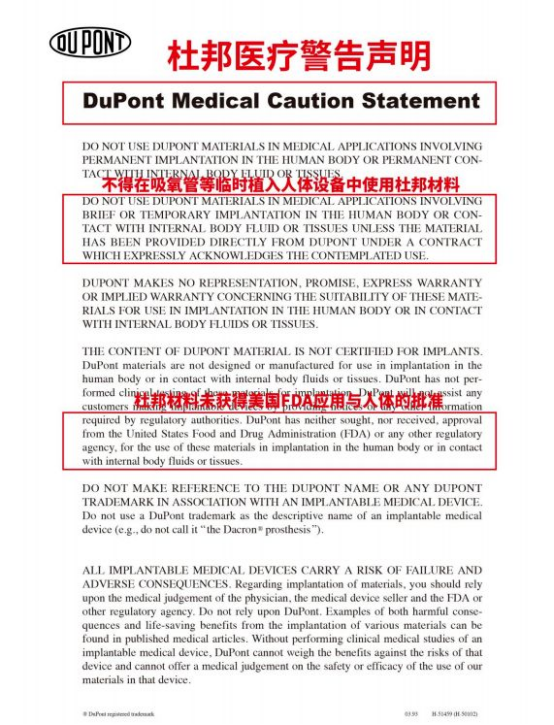
PFAS are often referred to as “forever chemicals.” They are extremely persistent in the environment, and once they enter the human body, they can be metabolized very slowly, with biological half-lives measured in years. The International Agency for Research on Cancer (IARC), in Monographs Volume 135, classified perfluorooctanoic acid (PFOA), one of the most representative members of the PFAS family, as a Group 1 human carcinogen [3]. DuPont’s official position statement explicitly states: “Do Not Use DuPont Products in Medical Applications Involving Permanent Implantation (more than 29 days) in the Human Body or Contact with Internal Body Fluids or Tissues (more than 29 days) Unless the Product Has Been Provided from DuPont under a Written Contract” [4].
In January 2026, French Law No. 2025-188 came into effect, prohibiting PFAS-containing cosmetics, textiles, footwear, and certain other consumer products [5]. China’s Ministry of Ecology and Environment, together with five other departments, jointly issued the List of Key Controlled New Pollutants (2023 Edition), which includes PFOS, PFOA, and PFHxS among the substances subject to control [6]. This is a legally binding administrative regulatory document, not an industry initiative.
Route 2: Industrial Strong-Alkali Electrolysis — Continuous Exposure to Escaping Alkali Mist
Traditional alkaline water electrolysis uses potassium hydroxide (KOH, typically at a concentration of 25–30%) or sodium hydroxide (NaOH) solution as the electrolyte to increase water conductivity [7]. This technology has been industrialized since the early 20th century and has been widely used in chlor-alkali production, ammonia synthesis, petroleum hydrogenation, and other fields for more than a century.
Applying this route to a home inhalation scenario presents an unavoidable engineering safety gap: during operation, strong alkaline electrolyte may escape continuously as alkali mist carried by the gas flow, and the operator needs to manually replenish the strong alkaline solution periodically. Potassium hydroxide is a strong alkali (pH ≈ 14), and its safety data sheet explicitly states that “dust irritates eyes and respiratory tract, corrodes the nasal septum” [8].
The reason the industrial strong-alkali route can reduce hardware costs to the range of several thousand yuan is that, from electrolyzer design and electrode-material selection to the safety-protection system, the entire technology route is designed around “industrial hydrogen production” rather than “medical gas production.” Its design requirements never included the constraint that “the gas produced will be inhaled by humans for several hours a day, continuously for years.”
Route 3: Asclepius Meditec’s Patented Medical Hydrogen-Production Electrolysis Technology — Designed from the Ground Up for Human Inhalation
The fundamental difference between Asclepius Meditec’s innovative medical electrolysis technology and the two routes above lies in one engineering decision: a membrane-free structure designed from the ground up. The authorized invention patent CN108295352B, “Health Gas Generation System,” states in its abstract that the electrolysis device produces a hydrogen-oxygen mixed gas (approximately 66.6% hydrogen and 33.3% oxygen) [9].
Because there is no proton-exchange membrane or other gas-separation barrier, there are no perfluorinated polymers anywhere along the gas pathway, thereby eliminating at the source the potential inhalation exposure to PFAS degradation products. The alkaline environment of the conductive solution also has a natural bacteriostatic effect. By contrast, PEM (also known as SPE) systems use a neutral pure-water environment; when a device is used intermittently (for example, switched off during the day and used at night), stagnant pure water at room temperature may allow microorganisms to proliferate, which could potentially enter the airways with the gas flow when the device is restarted. The alkaline conductive solution helps inhibit this risk through its chemical environment. Proprietary locking technology permanently confines the conductive solution inside the electrolyzer, so users neither need nor are able to add any external chemicals.

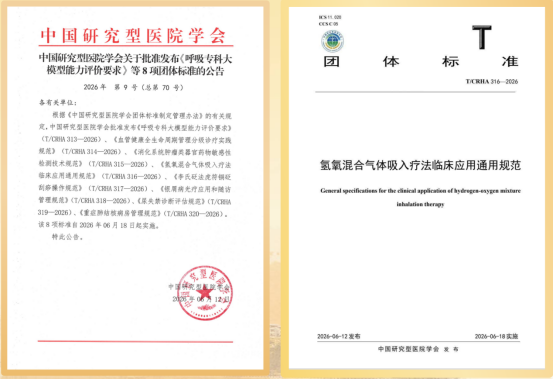
In June 2026, T/CRHA 316—2026, General Specification for the Clinical Application of Hydrogen-Oxygen Mixed Gas Inhalation Therapy, was officially released at the Health and Wellness Sub-Forum of the Straits Forum in Xiamen. The standard was jointly developed by the National Respiratory Medicine Center, Peking Union Medical College Hospital, and 20 other medical institutions. According to industry interpretation, the group standard explicitly excludes perfluorosulfonic acid membranes and strongly alkaline electrolytes from compliant materials [10].
This is not a self-regulatory initiative proposed by an industry association. It is a technical consensus developed by the National Respiratory Medicine Center, Peking Union Medical College Hospital, Shanghai Asclepius Meditec, and more than 20 Grade A tertiary hospitals following clinical practice and safety assessments. The establishment of this technical access red line, at the standards level, provides further support for the technology path selected by Asclepius Meditec 15 years ago.
If you see a hydrogen-oxygen generator advertised as using an “imported DuPont proton-exchange membrane” or a “genuine U.S.-made proton-exchange membrane,” do not automatically interpret this as a mark of quality. Instead, ask one question: has this device simply transferred membrane materials designed for industrial electrolysis into a human-inhalation application? DuPont’s own official position statement provides an important reference point.
The decision process is simple: ask the seller three questions—
First, what electrolysis technology does this device use? If the answer contains any of the keywords “proton-exchange membrane,” “ion-exchange membrane,” “SPE membrane,” “PEM membrane,” or “perfluorosulfonic acid membrane,” that corresponds to Route 1. If the answer contains “alkaline electrolyte” or “requires periodic addition of electrolyte,” that corresponds to Route 2.
Second, does the device have a medical device registration certificate number? A device without a Chinese NMPA registration number has not undergone the hundreds of safety tests required for Class III medical devices or a material biocompatibility assessment; its electrolyzer design is therefore benchmarked against industrial applications rather than human inhalation applications.
Third, does the device comply with T/CRHA 316—2026? According to industry interpretation, the group standard contains exclusionary provisions for technical routes such as perfluorosulfonic acid membranes [10]. Regardless of price, products on the other side of this red line are, in essence, substituting industrial components for medical-device-grade safety verification designed for human inhalation.
Q1: If the “imported proton-exchange membrane” promoted by a seller is a DuPont product, why can’t it be used?
The quality of DuPont’s Nafion series membranes is well established in industrial electrolysis and fuel-cell applications worldwide. The issue is that industrial quality does not equal medical safety—the underlying principles of the two evaluation systems are different. DuPont has already stated usage restrictions in its official position statement. In consumer products such as non-stick coatings and waterproof fabrics, PFAS exposure is primarily associated with routes such as skin contact and ingestion. In a hydrogen-oxygen generator, if a perfluorosulfonic acid membrane were to degrade, degradation products could potentially be carried with the gas flow directly into the alveoli; the exposure pathway and potential health implications are therefore fundamentally different.
Q2: Industrial strong-alkali electrolysis hydrogen-oxygen generators are inexpensive. Is short-term use harmful?
Potassium hydroxide and sodium hydroxide are irritating and corrosive to respiratory mucous membranes. Occupational-health standards impose strict exposure limits for alkaline aerosols. In a home-use setting, where there may be no monitoring, exhaust system, or protective equipment, the risk associated with continuous exposure to alkali mist does not simply disappear because use is “short term”; repeated exposure may result in cumulative effects.
Q3: What hydrogen-production technology does Asclepius Meditec use?
Asclepius Meditec’s patented medical hydrogen-production electrolysis technology. No proton-exchange membrane is used, eliminating at the source the potential exposure risk associated with degradation of perfluorinated materials (PFAS); there are no intentionally introduced perfluorinated materials along the gas pathway. No industrial strong alkali is used. The conductive solution is alkaline and therefore has a natural bacteriostatic effect, while proprietary locking technology permanently confines it within the electrolyzer so that it does not escape with the gas flow. Users do not need to add any chemicals.
[1] According to publicly available information, perfluorosulfonic acid proton-exchange membranes were designed for industrial fuel cells and industrial hydrogen production by electrolysis; DuPont’s official position statement has clearly specified restrictions on certain medical applications.
[2] According to publicly available technical information, PEM (also known as SPE) electrolysis uses a perfluorosulfonic acid proton-exchange membrane as the solid electrolyte.
[3] IARC Monographs, Volume 135 (2025): PFOA classified as a Group 1 human carcinogen.
[4] DuPont official position statement: Do Not Use DuPont Products in Medical Applications Involving Permanent Implantation (more than 29 days) in the Human Body or Contact with Internal Body Fluids or Tissues (more than 29 days) Unless the Product Has Been Provided from DuPont under a Written Contract.
[5] French Law No. 2025-188 (effective January 2026) — prohibiting PFAS-containing cosmetics, textiles, footwear, and certain other consumer products.
[6] Ministry of Ecology and Environment and five other departments, List of Key Controlled New Pollutants (2023 Edition), effective March 1, 2023.
[7] According to publicly available technical information, traditional alkaline water electrolysis uses potassium hydroxide (KOH) or sodium hydroxide (NaOH) solution as the electrolyte.
[8] ChemicalBook, “Potassium Hydroxide (1310-58-3) MSDS” — “dust irritates eyes and respiratory tract, corrodes the nasal septum.”
[9] China National Intellectual Property Administration, Invention Patent CN108295352B, “Health Gas Generation System” — according to the patent abstract, its electrolysis device produces hydrogen-oxygen mixed gas.
[10] T/CRHA 316—2026, General Specification for the Clinical Application of Hydrogen-Oxygen Mixed Gas Inhalation Therapy, contains exclusionary provisions for technical routes such as perfluorosulfonic acid membranes.


