Hydrogen-Oxygen Medicine, Part 81: Hydrogen-Oxygen Promotes Blood Flow vs. Atherosclerosis
Atherosclerosis(AS)is the main cause of coronary heart disease,cerebral infarction,and peripheral vascular disease.It generally involves the accumulation of various lipids and complex carbohydrates within blood vessels,forming thrombi,which then lead to ischemia or necrosis of tissues or organs supplied by the arteries.This is also one of the leading causes of death among middle-aged and elderly populations.(Because the accumulation of lipids in the arterial intima gives it a yellowish,porridge-like appearance,it is called"atherosclerosis.")
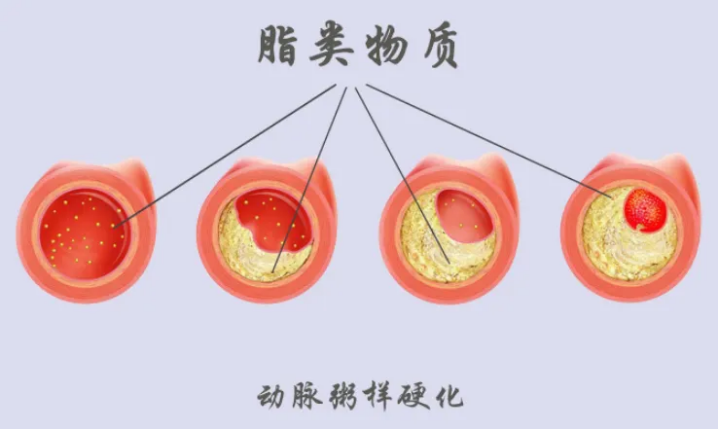
A recent national survey in China analyzed samples from 85,000 participants with an average age of 60.7 and found that the prevalence of atherosclerosis among middle-aged and elderly people in China reached 36.2%[1].The medical community believes that improving or even enhancing local baseline blood circulation through simple and feasible methods can have a beneficial effect on arteriosclerosis.In conditions such as cardiogenic shock and ischemic heart disease,inhaling pure oxygen can effectively increase cardiac output and oxygen-carrying efficiency.However,a growing number of clinical studies indicate that inhaling pure oxygen can cause circulatory and cellular abnormalities,including the release of large amounts of pro-inflammatory factors,dysregulation of local tissue blood flow,microcirculatory abnormalities,and reperfusion injuries such as malignant cellular hypoxia.Therefore,adding antioxidant components to limit ischemia-reperfusion injury caused by oxygen inhalation may represent a novel adjuvant therapeutic approach[2].Considering that hydrogen-oxygen inhalation improves ischemia-reperfusion injury through anti-inflammatory and anti-oxidative stress effects,while also exerting anti-atherosclerotic and plaque-stabilizing actions[3].The Key Laboratory of Arteriosclerosis in Universities of Shandong Province,in collaboration with institutions such as Taishan Medical University and the Atherosclerosis Research Institute of Taishan Medical University,jointly designed the study"Effect of Hydrogen-Oxygen Mixed Gas on Skin Blood Perfusion in Healthy Individuals,"which was successfully published in the Chinese Journal of Arteriosclerosis.The equipment used in this experiment was the"National Innovation"Class III medical device—Asclepius Meditec Hydrogen-Oxygen Nebulizer(National Medical Device Registration No.20203080066,concentration:66.6%hydrogen+33.3%oxygen,flow rate:3000ml/min).
Experimental MethodsScientists selected 12 eligible subjects(6 males,6 females).The blood flow detection method employed was the MoorFLPI-2TM laser speckle contrast imaging system for real-time blood flow imaging.Skin blood flow on the face and the back of the hand was measured before and after gas inhalation.Complete blood flow images of the lateral face and the entire back of the hand were obtained and quantified.In this experiment,subjects inhaled 3000 ml/min of hydrogen-oxygen gas via a nasal cannula for a duration of 30 minutes.Furthermore,between each measurement,volunteers were instructed to sit quietly for 10 minutes to eliminate the effects of emotion and movement on blood flow in the tested area.
Experimental ResultsAfter inhaling the hydrogen-oxygen mixture,as observed through the aforementioned laser speckle blood flow real-time imaging system,the facial blood flow of the volunteers significantly increased,as shown in the figure below:
In the image above,the red areas represent abundant blood flow.
Skin blood flow in the facial area increased from 141.4±6.8 flux units(FU)before inhalation to 154.7±9.3 FU,indicating that hydrogen-oxygen mixture can enhance facial skin blood flow in volunteers by 9.7%.
The effect of inhaling hydrogen-oxygen mixture on facial skin blood flow is significant,with noticeable differences observed after just 30 minutes of inhalation.
Some participants showed a noticeable increase in blood flow on the back of the hand after inhaling hydrogen–oxygen.Several also reported a sensation of warmth,which may reflect improved circulation.
Finger Blood Flow Distribution Map
After inhaling hydrogen-oxygen mixture,skin blood flow on the back of the subjects'hands significantly increased.Skin blood flow on the back of the hand increased from 67.7±5.0 FU before inhalation to 84.3±5.8 FU,indicating that hydrogen-oxygen mixture can enhance skin blood flow on the back of the hand in volunteers by 27.1%.
Results and DiscussionOne of the primary prevention and treatment strategies for ischemic cardiovascular and cerebrovascular diseases is to restore blood supply to the affected area and distal regions or promote local blood circulation,thereby restoring perfusion to the damaged site and improving functional recovery.Inhaling pure oxygen is a conventional clinical measure for treating the aforementioned diseases.[4]
However,after reperfusion occurs,oxidative reactions,including lipid peroxidation,generate a large number of harmful oxygen free radicals,leading to reperfusion injury,which is a major cause of poor prognosis in cardiovascular and cerebrovascular diseases.[5]Hydrogen molecules can selectively scavenge harmful oxygen free radicals and protect against ischemia-reperfusion injury in multiple organs,making it an ideal auxiliary gas for oxygen inhalation.[6]
The effect of hydrogen-oxygen mixture on blood circulation in healthy individuals has not been reported.This study is the first to discover that hydrogen-oxygen mixture can effectively increase skin blood perfusion in healthy individuals,suggesting that hydrogen-oxygen may have broader biomedical effects,and its application value warrants further investigation.
The hydrogen-oxygen mixture flow rate used in this study(3 L/min)ensures that the generated mixture is immediately inhaled by the human body,with reliable safety.No other adverse reactions occurred in any of the volunteers.
In summary,short-term inhalation of hydrogen-oxygen mixture can significantly increase the skin blood circulation volume in the face and hands of healthy individuals.This suggests that inhaling hydrogen-oxygen mixture could serve as a new therapeutic approach for improving local blood circulation,potentially offering new insights for humanity in addressing the challenge of atherosclerosis.
References:[1]A survey involving 85,000 people in China reveals:One-third of the elderly have arteriosclerosis,People's Daily Online-Life Times,Expert interviewed:Ding Rongjing,Deputy Chief Physician of the Department of Cardiovascular Medicine,Peking University People's Hospital,April 29,2018;[2]Lim H S.Cardiogenic shock:failure of oxygen delivery and oxygen utilization[J].Clin Cardiol,2016,39(8):477-483.[3]Song G,Zong C,Zhang Z,et al.Molecular hydrogen stabilizes atherosclerotic plaque in low-density lipoprotein receptor-knockout mice[J].Free Radic Biol Med,2015,87:58-68.[4]Powers W J,Rabinstein A A,Ackerson T,et al.2018 guidelines for the early management of patients with acute ischemic stroke:a guideline for healthcare professionals from the american heart association/american stroke association[J].Stroke,2018,49(3):e46-e110.[5]Lochner A,Marais E,Huisamen B.Melatonin and cardioprotection against ischaemia/reperfusion injury:what's new?[J].J PinealRes,2018:e12490.doi:10.1111/jpi.12490.[6]Ohsawa I,Ishikawa M,Takahashi K,et al.Hydrogen acts as a therapeutic antioxidant by selectively reducing cytotoxic oxygen radicals[J].Nat Med,2007,13(6):688-694. 


