Why Does Inhaling Hydrogen-Oxygen Increase Alcohol Tolerance and Reduce Hangovers? Latest Research Released
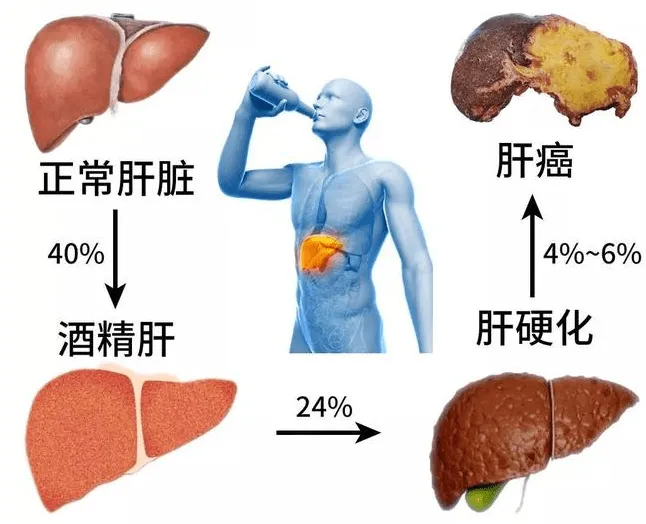
Alcoholic Liver Disease(ALD)is caused by long-term alcohol consumption and is closely related to steatohepatitis,liver fibrosis,and even liver cancer.Abstaining from alcohol is the best way to improve ALD,but it is difficult for heavy drinkers to stop drinking,and continued binge drinking exacerbates liver damage and even leads to death.In such cases,more effective methods are needed to alleviate ALD,especially liver injury caused by alcohol abuse.Long-term alcohol consumption also disrupts the integrity of the intestinal barrier[1],which is associated with a reduction in intestinal mucus and damage to tight junction(TJ)proteins.
Given the global pandemic of alcoholic fatty liver disease and the lack of effective treatments,scientists from the Department of Microbiology and Immunology at Shanxi Medical University,the Key Laboratory of Cell Physiology of the Ministry of Education of China,and the Morphology Laboratory of Shanxi Medical Universitycollaborated to conduct an experiment on improving alcoholic liver injury through hydrogen-oxygen inhalation.They found that inhaling a high concentration of hydrogen-oxygen mixture(66.6%hydrogen+33.3%oxygen)can alleviate liver damage by reducing oxidative stress and inflammatory responses,while also improving gut microbiota and enhancing the intestinal barrier.This discovery regarding the improvement of liver health through hydrogen-oxygen inhalation has garnered significant attention,and the related paper was published in the international journal ELSEVIER[2].
Screenshot of the paper
Experimental DesignScientists divided the experimental models(rats)into the following three groups(differences):
Normal Control(NC)Group:Isomaltose treatment
Alcohol Control(AC)Group:Ethanol treatment
Hydrogen-Oxygen Inhalation(H2)Group:Ethanol treatment+Hydrogen-oxygen inhalation
Additionally,the three model groups had identical dietary conditions and treatment methods,serving as a control to compare the protective effects of hydrogen-oxygen inhalation on alcoholic liver disease(ALD).
Experimental Results①Liver Morphology:Scientists dissected the experimental models and found that hydrogen-oxygen inhalation significantly improved liver weight and liver index,as shown below:
It can be observed that the liver color,morphology,and size of the hydrogen-oxygen group(H2)are close to those of the normal control group(NC),while the pathological changes in the alcohol control group(AC)are very evident.The liver index calculated using the formula also indicates that hydrogen-oxygen effectively maintains the liver.Even after ethanol treatment with the same amount of alcohol administered,the condition of the H2 group shows almost no significant difference from that of the normal group NC.
②Liver Cells:Scientists compared the pathological conditions of the liver in the three groups and found that hydrogen-oxygen inhalation alleviated spinal cord disorder and edema in liver cells,as well as reduced acute alcohol-induced liver injury,as shown below:
In terms of cell morphology,the H₂group exhibited the least edema.On the right,ALT represents serum alanine aminotransferase,and AST represents aspartate aminotransferase.Higher levels of both indicate greater liver damage.It can be observed that the H₂group showed significant improvement compared to the AC group.
③Hepatic Oxidative Stress:Oxidative stress is a key mechanism in liver injury.MDA is a product of oxidative stress,while GSH and SOD are oxidative markers.Scientists conducted tests,and the results are as follows:
In the three indicators—MDA,GSH,and SOD—the H₂group converged with the normal control(NC)group and diverged from the alcohol control(AC)group,indicating that hydrogen-oxygen inhalation improves alcohol-induced oxidative stress.Although only the H₂and AC groups were treated with ethanol,the effects of ethanol were reversed after H₂treatment.
④Hepatic Inflammatory Response:To observe the impact of inflammation on alcoholic liver injury,scientists measured the levels of various inflammatory factors and LPS in the three groups of rats.The results are as follows:
Multiple indicators collectively indicate:Hydrogen-oxygen inhalation alleviates hepatic inflammation in acute ALD rats by inhibiting the LPS/TLR4/NF-κB signaling pathway.
⑤Hepatic Steatosis:Liver injury is associated with hepatic steatosis.Scientists examined the expression of related genes and found that hydrogen-oxygen inhalation inhibits hepatic steatosis,as follows:
In the AC group,the expression of PPARαand CPT-1 was downregulated.After inhaling hydrogen-oxygen,the expression of PPARγand FAS genes was downregulated,while the expression of the CPT-1 gene was upregulated.These results indicate that inhaling hydrogen can improve hepatic steatosis by regulating the expression of genes related to lipid metabolism.
⑥Intestinal Morphology:Scientists also observed the intestinal conditions of the three groups,with the following results:
Observations above this point pertain to ileal villus morphology.The structures in both the H2 and NC groups were orderly,while the arrangement in the AC group was loose,indicating that the adverse effects of alcohol on ileal villi were reversed by hydrogen-oxygen inhalation.
Immunofluorescence staining results of ileal tissue showed that the levels of occludin and ZO-1 proteins in AC rats were downregulated compared to normal rats,while the expression of tight junction-related proteins was upregulated after hydrogen-oxygen inhalation.This is consistent with the RT-PCR results,indicating that hydrogen-oxygen inhalation maintained the integrity of the intestinal barrier.
⑦Gut Microbiota and Fecal Transplantation:Scientists observed the richness of gut microbiota in the three model groups,with the following results:
This is a highly complex test,and scientists examined as many changes in gut microbiota as possible.The results showed that hydrogen-oxygen inhalation reversed the alcohol-induced changes in gut microbiota.
Furthermore,through gut microbial markers,scientists demonstrated that hydrogen-oxygen inhalation can improve gut microbial involvement in alcohol metabolism,lipid metabolism,and immune function.Another significant experiment involvedscientists transplanting the fecal microbiota of hydrogen-oxygen-inhaling rats into the intestines of ethanol-treated(alcohol-gavaged)rats,finding it effectively inhibited liver damage!This indicates that hydrogen-oxygen alters the gut microbiota to combat alcoholic liver disease.
Hydrogen-Oxygen vs.Alcoholic Liver DiseaseExcessive alcohol consumption triggers various health issues;short-term drinking leading to a blood alcohol concentration exceeding 0.08%often results in cellular damage,respiratory failure,and even life-threatening conditions.[3]Patients with Alcoholic Liver Disease(ALD)are more prone to excessive drinking than healthy individuals.As a natural antioxidant,hydrogen-oxygen has been proven effective in treating and preventing various diseases,such asnon-alcoholic steatohepatitis,hepatic ischemia/reperfusion injury,obesity,diabetes,neurodegeneration,and metabolic syndrome.Moreover,no toxic side effects have been observed from inhaling high concentrations of hydrogen-oxygen.[4]
In this study,scientists found that high-concentration hydrogen-oxygen inhalation protects the liver by reversing the reduction of antioxidant substances(GSH,SOD)and decreasing the total redox product(MDA)in the liver.Scientists also discovered that hydrogen-oxygen inhalation reduces the expression of inflammatory factors TNFα,IL-1β,and IL-6,lowers the expression of the macrophage marker F4/80,and inhibits the TLR4/NF-κB pathway in the liver.
Through in vitro cell experiments,it was also found that H2 can downregulate the levels of ROS,TNF-α,IL-6,and IL-1βand inhibit the activation of the TLR4/NF-κB pathway[5].Therefore,hydrogen-oxygen can effectively alleviate oxidative stress and inflammatory responses induced by acute alcohol consumption.
More importantly,the experiment found that hydrogen-oxygen can improve the intestinal flora,inhibit the proliferation of harmful bacteria,and increase the abundance of beneficial bacteria.Through the intestinal flora,it can reduce the development of metabolic endotoxemia and inflammation.Some studies have found that hydrogen molecules can also slow down chronic ulcerative colitis and inflammatory bowel disease[6],all indicating the improvement of hydrogen-oxygen on the intestines.
In summary,the protective effects of hydrogen-oxygen on the liver and intestines are related to its anti-inflammatory and antioxidant mechanisms.This experiment comprehensively demonstrates the protective effect of hydrogen-oxygen on the liver,which is undoubtedly great news for the growing number of alcohol enthusiasts,liver disease patients,and sub-health patients worldwide!
References:[1]A.Lamas-Paz,et al.,Intestinal epithelial cell-derived extracellular vesicles modulate hepatic injury via the gut-liver axis during acute alcohol injury,Front.Pharmacol.11(2020),603771,[2]Fan et al.,Hydrogen gas ameliorates acute alcoholic liver injury via anti-inflammatory and antioxidant effects and regulation of intestinal microbiota,ELSEVIER,2023[3]A.Mirijello,et al.,Identification and management of acute alcohol intoxication,Eur.J.Intern.Med.108(2023)1–8[4]C.B.Zhang,et al.,Hydrogen gas inhalation protects against liver ischemia/reperfusion injury by activating the NF-κB signaling pathway,Exp.Ther.Med.9(6)(2015)2114–2120[5]H.Yin,et al.,Hydrogen gas alleviates lipopolysaccharide-induced acute lung injury and inflammatory response in mice,J.Inflamm.(Lond.)19(1)(2022)16[6]L.Song,et al.,Hydrogen-rich water partially alleviates inflammation,oxidative stress and intestinal flora dysbiosis in DSS-induced chronic ulcerative colitis mice,Adv.Med.Sci.67(1)(2022)29–38 


